
The NetX Diary study’s goal was to understand the usability and effectiveness of the redesigned NetX DAM portal. We uncovered challenges and opportunities through a Pre-Diary Study Qualtrics Survey, Use-Based Diary Entries into a Qualtrics form and if necessary, follow-up interviews.
All data was analyzed and sorted through affinity mapping in Notably.ai. Results from the study were presented tothe photography manager, creative director and the third-party DAM company to improve ease of finding images.
NETX
DIARY STUDY
Evaluating an Image Digital Asset Management System’s Effectiveness
Lead UX Researcher and Moderator | Georgia Institute of Technology | May 2025 - June 2025
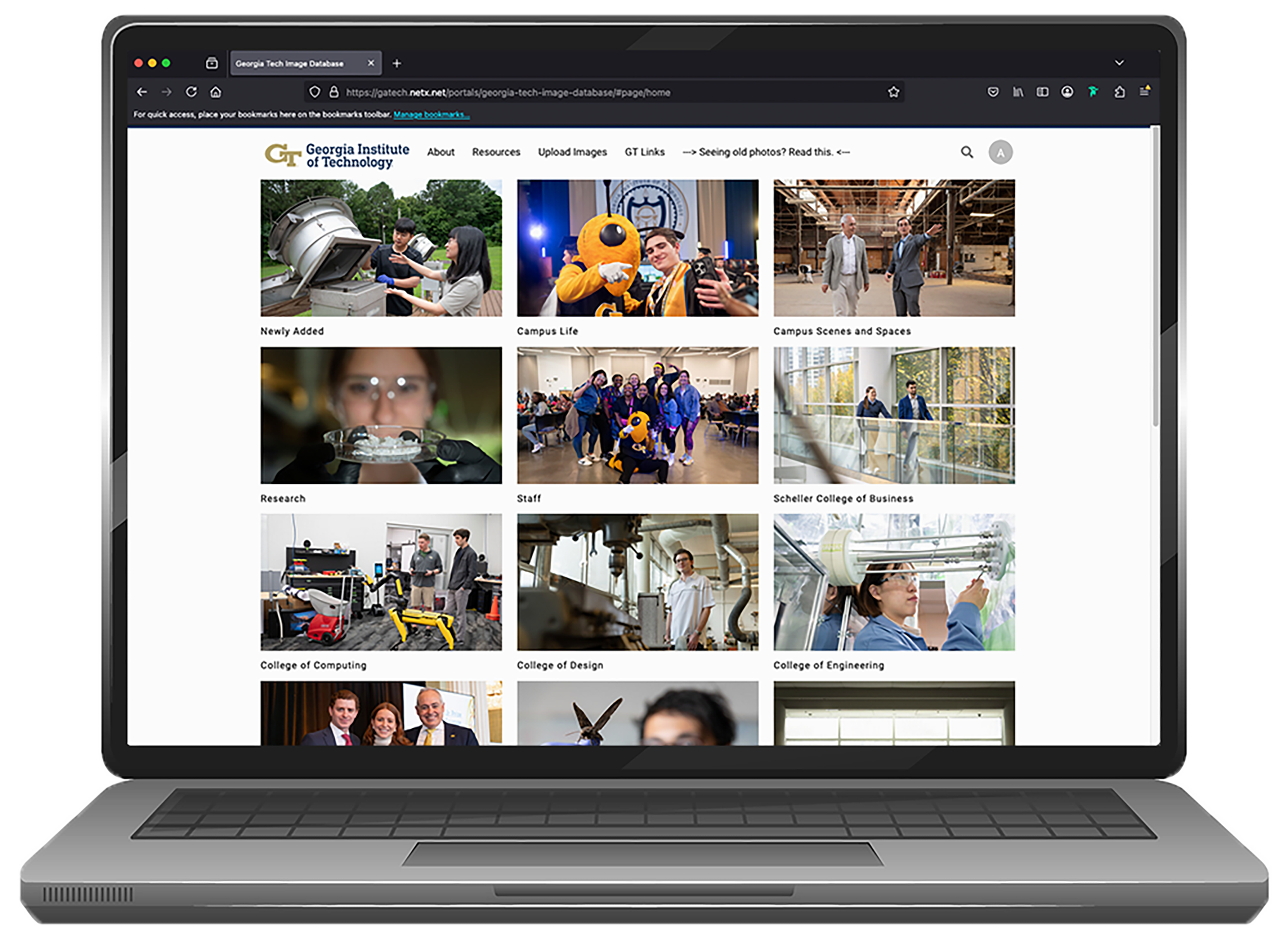
Over the last year NetX, also known as Image Portal, changed to include collection categories, AI Smart tagging, and improved visual design. Despite user interface and feature improvements, users continued to report difficulty in finding and sourcing images.
Overall
When approached with the initial idea to begin researching how users liked the new version of NetX, I began to explore the various qualitative research methods that would best suit understanding users’ NetX workflow. I decided a diary study would be most effective in gathering accurate, in the moment data for the end-to-end user experience of sourcing images.
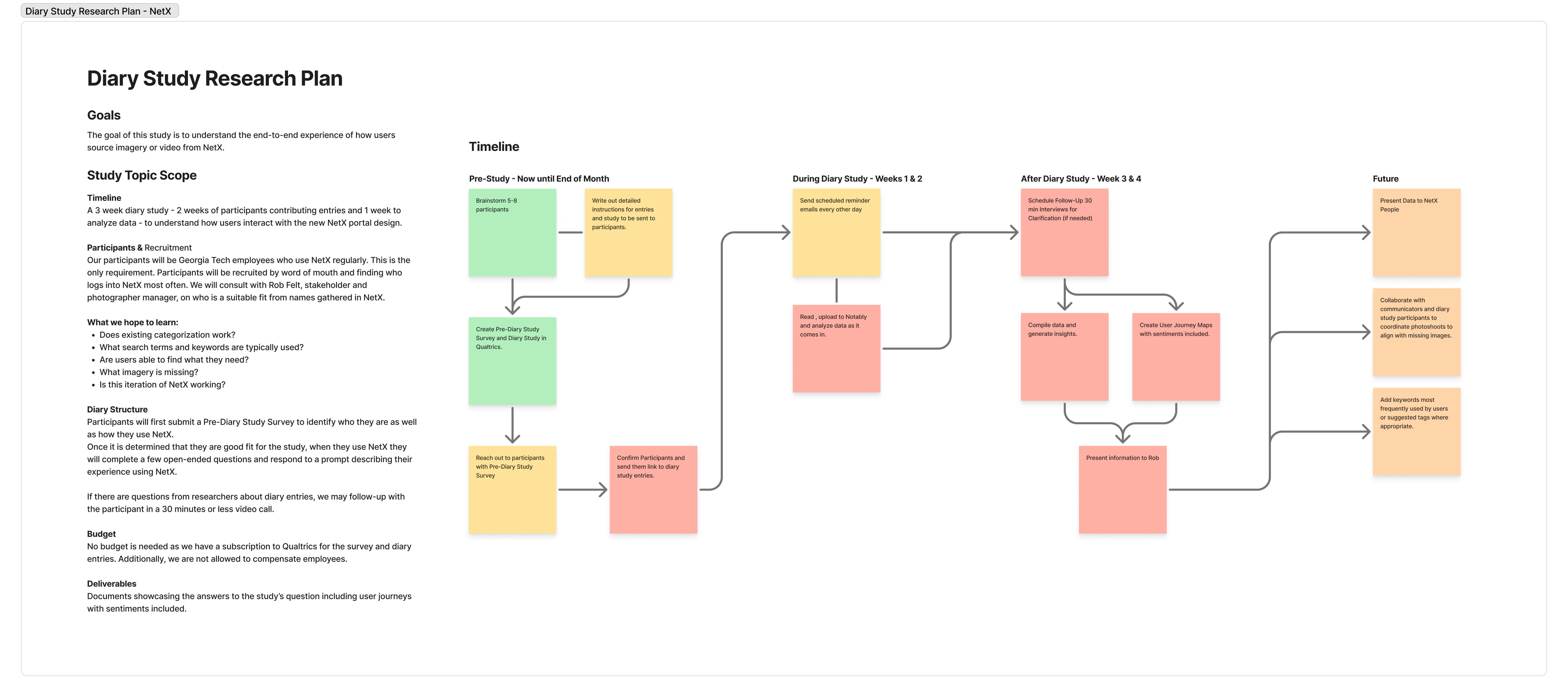
Through a diary study, I hypothesized that we would gain insights that answered these questions:
- Does existing categorization work?
- What search terms and keywords are typically used?
- Are users able to find what they need?
- What imagery is missing?
- Is this iteration of NetX working?
Recruiting Participants
When discussing participants, we consulted the photography manager on who would be a suitable fit. We decided that the only requirement was that our participants regularly used NetX. Participants were recruited through word of mouth and finding who logs into NetX most often. Participants submitted a Pre-Diary Study Survey to identify their role at Georgia Tech, image use cases and where they began their user journey when accessing NetX. We had a total of 9 participants who had a range of job titles.
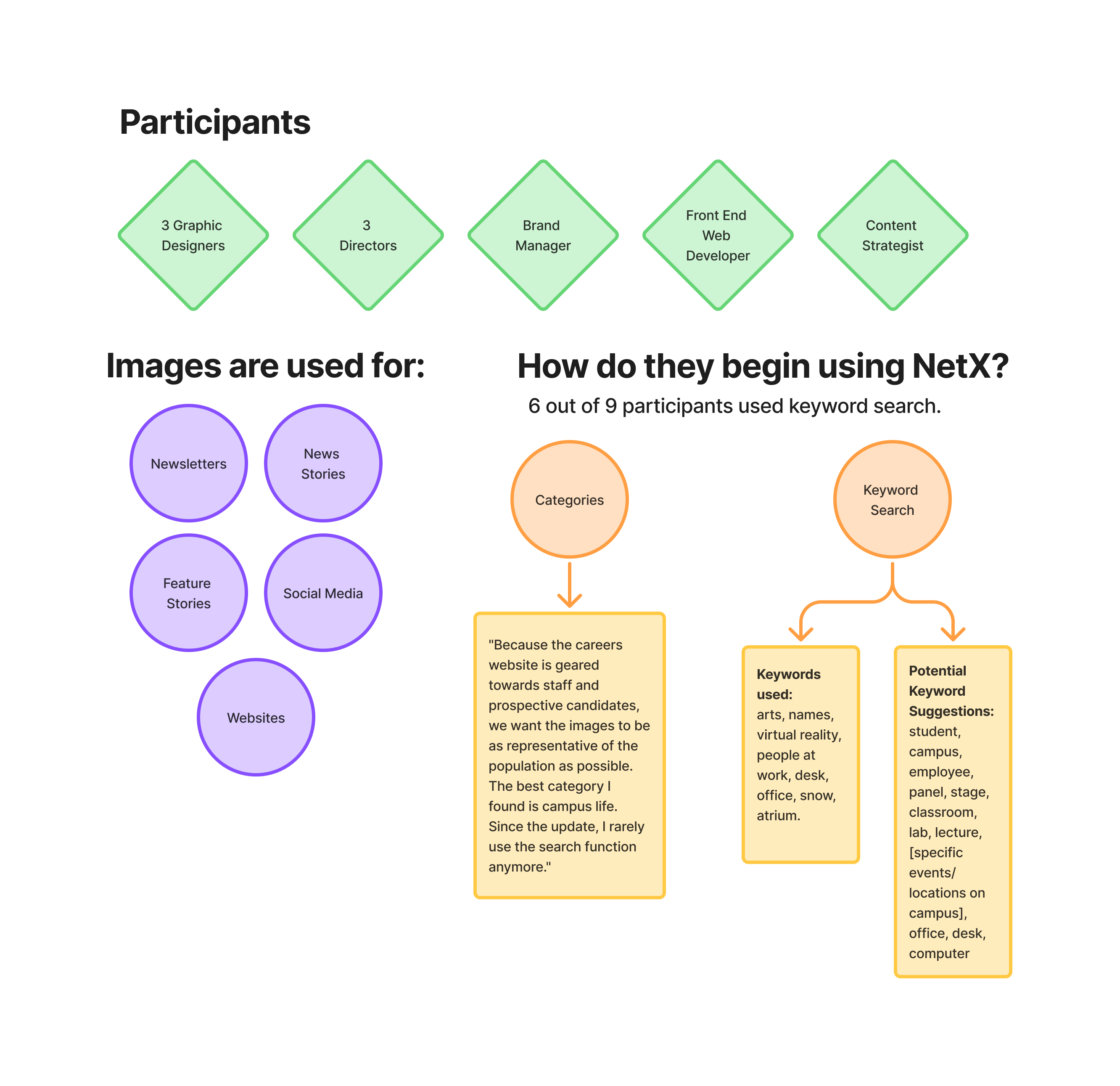
Once it was determined that someone was a good fit for the study, they were asked to use Qualtrics to complete open-ended questions and respond to a prompt asking them to describe their experience using NetX.
Analyzing Data
When all entries were submitted, I began analyzing the data using Notably and it’s AI features to create an initial guide for sorting the data obtained from diary entries. Next, I tagged the notecards using Georgia Tech’s Tag Taxonomy.
With the data tagged, I continued to break it down using affinity mapping to categorize the data into groups consisting of the themes seen in the image below.
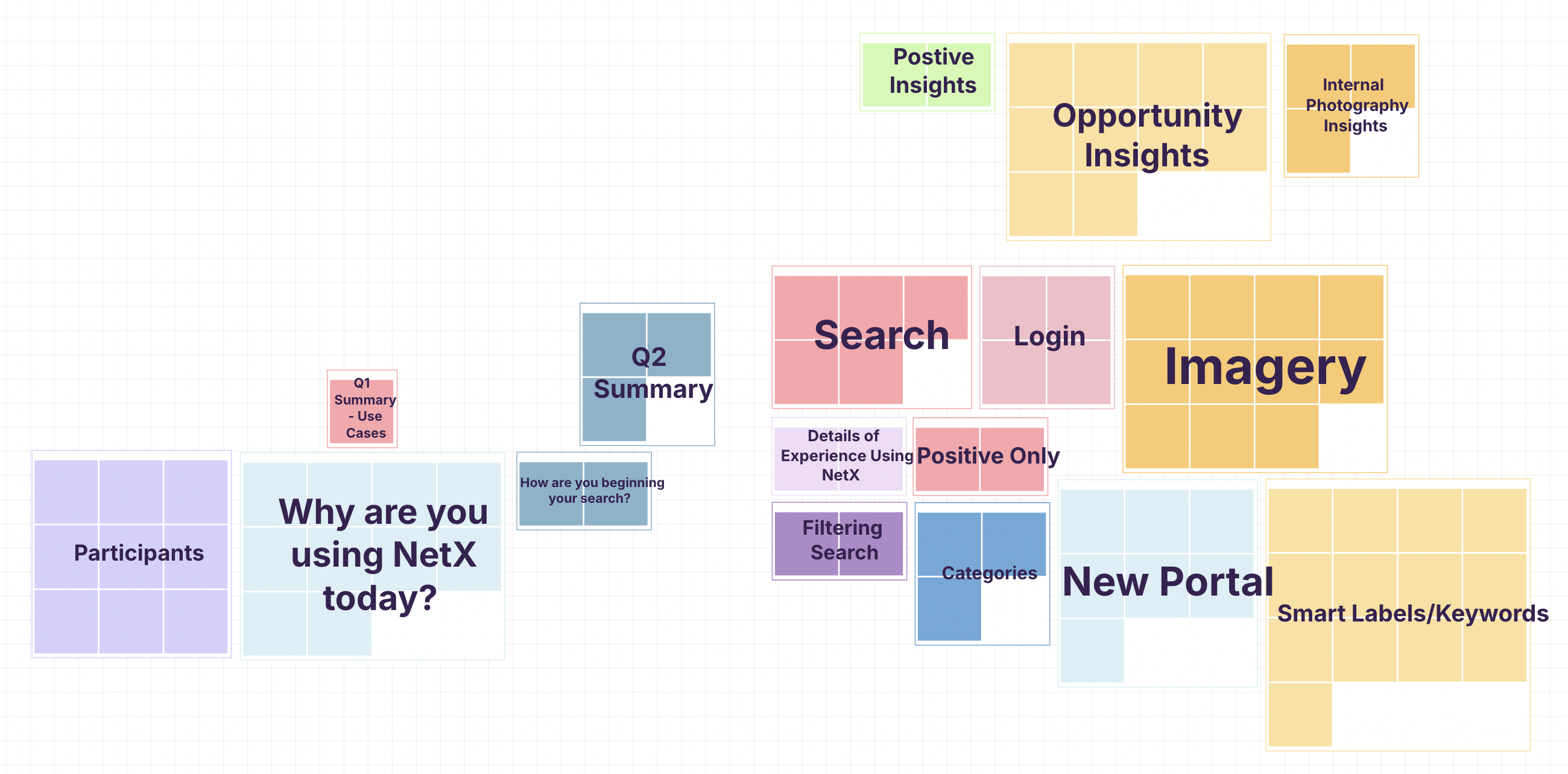
From this process I was able to formulate user insight statements with proof points from the tagged data. The last step in the process was to determine if these user insight statements applied to the third-party that supports NetX or to the internal photography team.
Recommendations
Through this diary study we learned that the new NetX website design and categorization was appreciated by users and that often users’ needs were met when it came to imagery.
We also learned that Georgia Tech’s photography team should work to more frequently update imagery, look for opportunities to include faculty/staff in photoshoots, create a best practices page for NetX and have a UX Content audit of text on NetX.
Regarding NetX insights, we learned users have a number of issues including remembering the web address, logging in and staying logged in to NetX. One of the top requests was to improve filtering options when it comes to sorting newest to oldest.
The last two insights are ones that require collaboration between NetX and Georgia Tech’s internal photography team. First, users would like more guidance on NetX functions and how to use them. Second, the diary study revealed that smart tagging isn't working well for the users for a variety of reasons including incorrect tagging, generic keywords and confusion on if smart tagging is meant to be alt text or keywords. This insight resulted in smart tagging being deactivated.
There are two next steps for this project. The first is to continue to work in conjunction with the photography team to enact recommendations. The next step after that is to meet with NetX and present our findings.
Once we've met with NetX, we will know which recommendations are possible to implement. If necessary, we may conduct further testing once changes are made.